


WSOP Poker: Texas Holdem Game
Playtika
I spent time with WSOP Poker: Texas Holdem Game as a mobile card game rather than treating it like a simple poker reference. Its main appeal is easy to understand: it brings Texas Hold’em into a polished, always-available format, while also covering video poker and Omaha poker. That gives it more range than a single-table poker app, but it also means the experience is built around returning regularly, managing a virtual bankroll, and deciding how much attention to give optional purchases.
Playtika is the developer, and the game has been available since November 5, 2013. It is free to install, rated Teen, and supports devices running Android 7.0 or later. The current version is 13.2.0. Those details matter because this is not a brand-new experiment: it is an established card game with a large audience, but its long-running design also reflects the habits of free-to-play mobile gaming.
How the poker experience feels in everyday use
The strongest reason to try this game is convenience. If I have a short break and want a few hands of Hold’em, I do not need a physical deck, a group of friends, or a long setup process. I can open the app, choose poker, and focus on familiar decisions such as whether to call, raise, fold, or wait for a better opportunity. That makes it suitable for casual sessions during a commute, while waiting for an appointment, or after dinner when I want something more active than scrolling.
It is also useful for players who enjoy poker but do not always have access to a live table. The Texas Hold’em format remains recognizable, and the inclusion of Omaha gives experienced players another ruleset to explore. Video poker adds a different rhythm: instead of reading opponents at a table, I can concentrate on hand selection and probability. I would not call these modes interchangeable, because they reward different habits, but the variety helps prevent the app from feeling like one repeated table forever.
The store summary presents the game as a combination of World Series of Poker branding, Texas Hold’em, video poker, and Omaha. In practice, I found that the important question is not whether every mode sounds attractive, but which type of decision-making I actually enjoy. Hold’em is the natural starting point for most people. Omaha is better for someone who already understands poker hand construction and wants more complexity. Video poker is the more solitary option when I want quick rounds without the social pressure of a table.
Related News

Why WhatsApp Messenger Still Makes Everyday Communication Feel Easy

Jurassic World: The Game Is the Better Dino Tycoon for Strategic Players

Threads in Real Life: Who Should Join, Lurk, or Leave

How SHEIN Turned Shopping Into an Endless Content Feed

How to Make Fortnite Feel Smarter on Mobile

Should You Switch to Microsoft Outlook on Mobile?
The interface is at its best when I already know the basic rules. Poker terminology and betting choices can move quickly, so a complete beginner may need to pause and learn outside the match. I would recommend new players first understand blinds, community cards, hand rankings, and the difference between checking, calling, and raising. Learning those fundamentals before worrying about speed makes the early experience much less confusing.
What makes the free model important
The game costs nothing to download, which lowers the barrier to trying all three styles of play. However, “free” should not be read as “without spending pressure.” In-app purchases range from $0.99 to $799.99 per item. That is a very wide purchase range, and it is the most important financial detail to keep in mind before starting.
I would approach the app as a free entertainment product with optional spending, not as a way to obtain real-money poker winnings. A player who is comfortable never buying anything can still decide whether the core experience is enjoyable, but the presence of large purchase options means I would set a personal limit before playing. On a phone, a few taps can make spending feel detached from the time and money involved, so using device purchase controls is sensible, especially on a shared family device.
Gallery
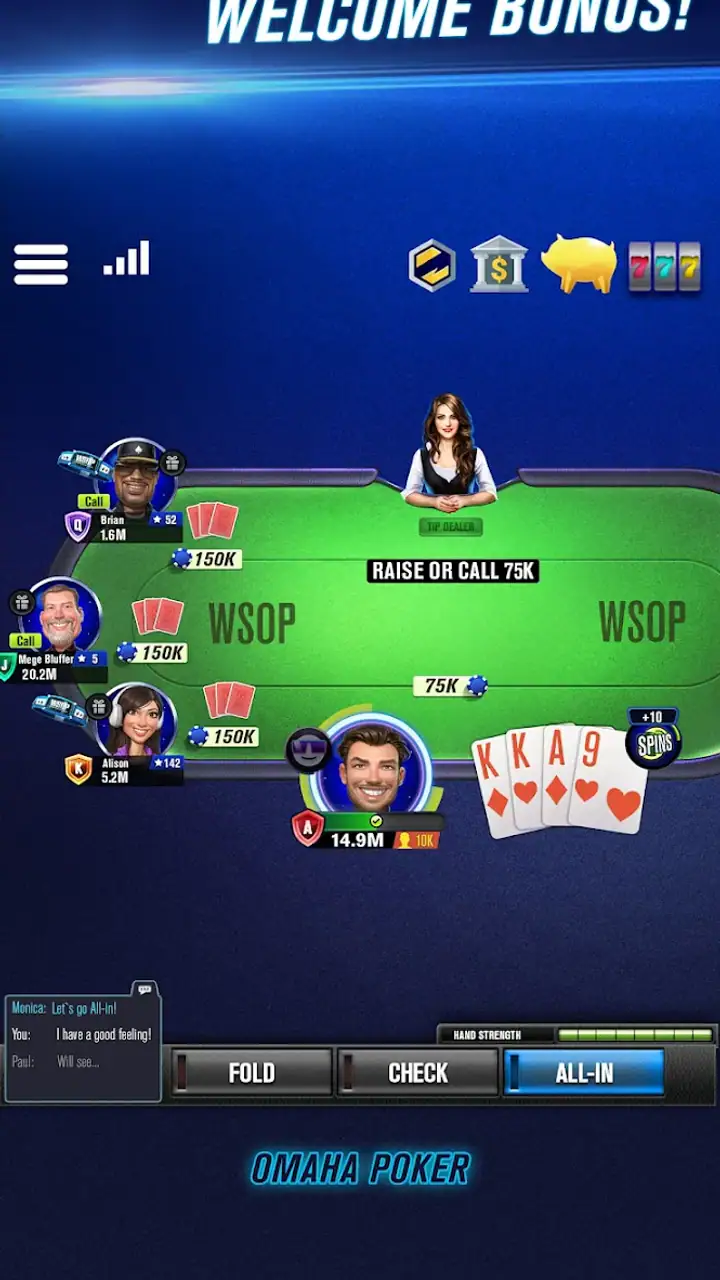
One practical habit helped me keep the game in perspective: I treated virtual chips as a session resource, not as something I needed to protect at all costs. If a run went badly, I stopped rather than chasing the loss with a purchase. That distinction is useful because poker already encourages emotional decisions, and mobile presentation can make the next hand feel like an immediate solution.
Progress can be motivating, but it can also create pressure
Progression is most enjoyable when it gives me a reason to return without becoming the reason I feel obligated to return. In a poker app, the temptation is easy to recognize: a player may want to rebuild a stack, reach a more exciting table, or recover from a poor session. I found that the healthiest approach is to define the purpose of each visit before opening the game. Sometimes that means playing a few relaxed hands; other times it means practicing Omaha decisions. If the goal is unclear, the session can turn into repetitive chasing.
That is where the free-to-play structure deserves honest attention. A player who enjoys competition may be tempted to spend in order to maintain momentum, while a casual player may simply ignore the purchase path and use the app as a short card-game break. Neither approach is automatically right for everyone. The important trade-off is that the game can be entertaining without payment, but the surrounding progression may feel more demanding to someone who wants constant advancement.
I would particularly caution players who dislike virtual economies or who find it hard to stop after losing. This is not a criticism of poker rules themselves; it is a matter of how a mobile version fits into daily habits. If I am tired, distracted, or already frustrated, my judgment at the table is worse. Closing the app after a poor hand is often a better decision than trying to force a comeback.
A useful routine is to separate learning sessions from bankroll sessions. During learning, I focus on why a hand was played rather than whether it won. During a bankroll session, I use smaller, calmer decisions and stop when the experience stops being fun. This approach makes the app more useful as practice and less likely to become an emotional loop.
Fairness: what I can judge and what I cannot
Fairness is a reasonable concern in any digital poker game. Players want to know whether opponents are genuine, whether outcomes are handled consistently, and whether purchases change competitive chances. I can judge the game as a poker experience, but I would not claim that a personal play session proves how every underlying system works. The safest conclusion is to evaluate the app by its visible play, its purchase structure, and the expectations it sets for the player.
For me, the key distinction is between playing for entertainment and treating the game like a serious competitive measurement. A mobile poker app can help me practice patience, hand evaluation, and table awareness, but it should not automatically be treated as equivalent to a live poker room or a regulated real-money platform. The free format and optional purchases place it firmly in the entertainment category from my point of view.
Spending can also affect how fair a session feels, even when the rules of a hand remain the same. If a player can buy more virtual resources, that may change how long they can continue or how comfortably they absorb losses. I would therefore compare myself with other players only within the game’s own environment, not use results as proof of real-world poker skill, and never spend money simply to keep up with someone else.
My advice is to decide what “fair” means for your own use before installing it. If you want a free way to pass time with familiar poker rules, it may fit. If you want transparent real-money competition, formal tournament conditions, or a controlled offline experience, a traditional poker alternative may be a better choice. The right comparison depends on whether you value convenience, variety, social competition, or strict control over spending.
Small decisions that improve the experience
One non-obvious advantage of having Hold’em, Omaha, and video poker together is that I can use one mode to reset my mindset after another becomes frustrating. After a run of difficult table decisions, video poker provides a quieter change of pace. After too much solitary play, Hold’em brings back the feeling of reading a table. I would not use this as a way to chase losses, but as a way to avoid forcing one mode when I no longer enjoy it.
Another useful habit is to treat Omaha as a deliberate learning step rather than an instant alternative. The extra cards can make hands look stronger than they really are, and beginners may overvalue combinations that do not produce the required final hand structure. I found it more productive to slow down, check the actual hand possibilities, and avoid making decisions based only on attractive starting cards.
For Hold’em, I recommend watching the table rhythm before trying to play every hand aggressively. Folding is not wasted time; it is part of managing attention and resources. A player who enters every pot because the next hand is immediately available can create unnecessary pressure. The mobile format makes patience especially important because quick taps can replace thoughtful decisions.
Video poker has its own trade-off. It is convenient when I want a short, focused session, but it does not offer the same opponent-reading element as a table. That makes it a poor substitute for someone who plays poker mainly for bluffing and social tension. It is better viewed as a separate card-game experience inside the same app.
I also recommend checking the purchase amount carefully before confirming anything. The available range includes very small purchases as well as items costing hundreds of dollars, so the difference between an occasional convenience and a serious expense is substantial. I would never install this on a child’s unrestricted device, despite the game being rated Teen, because age suitability and spending control are separate questions.
Who should try it, and who should skip it
I think this game is a good match for someone who already understands basic poker and wants quick access to several formats. It is especially appealing if you enjoy switching between table play, Omaha’s added complexity, and the simpler rhythm of video poker. The large audience also suggests that it has broad recognition: it has passed 50 million installs, carries a 4.2 average from around 1.7 million ratings, and has roughly 231 thousand written reviews. Those figures show substantial reach, though popularity alone does not guarantee that its spending model will suit you.
I would also recommend it to a casual player who wants a familiar card game without arranging a group. It works well for short sessions, and the free entry makes experimentation easy. Someone who is learning poker can use it to become more comfortable with the flow of a hand, provided they remember that app-based play is not a complete substitute for studying strategy.
I would skip it if you want offline poker with no virtual economy, if you dislike optional purchases appearing around progression, or if you need a tightly controlled environment for real-money competition. I would also choose a simpler poker app for a complete beginner who wants a slow tutorial-first experience. This game offers variety, but variety can make the first steps less focused.
Players who are vulnerable to chasing losses should be particularly careful. The combination of rapid hands and purchases up to $799.99 per item is not a good fit for anyone who struggles to stop once a session goes badly. In that situation, a free offline card game or a non-monetized practice tool would be a safer alternative.
What I would want to know before installing
The first question many readers will have is whether they must pay to begin. No: the game is free to install. The more useful follow-up is whether free play will feel comfortable over time. That depends on how much you care about progression and how willing you are to ignore optional purchases. I would begin without spending, learn the interface, and decide only after several relaxed sessions whether the game itself is worth keeping.
Another likely question is whether it is only Texas Hold’em. It is not limited to that format; Omaha and video poker are part of the package as well. That makes it more flexible than a single-mode poker title, although a player interested only in classic Hold’em may find the extra options unnecessary.
People also ask whether it is suitable for children. The content rating is Teen, so I would not treat it as a children’s card game. More importantly, the purchase range means parents should consider device-level spending restrictions rather than relying on the age label alone.
Compatibility is straightforward for Android users with version 7.0 or newer. The current release is 13.2.0, so I would check that an older phone has enough room and performs comfortably with modern apps before committing to regular play. I would also keep the application updated through the normal app store process, since card games that evolve over time may change their balance or presentation.
Finally, readers may wonder whether a high rating means the app is universally enjoyable. I do not think so. An average of 4.2 from a very large number of ratings is a positive sign of broad appeal, but the experience still depends heavily on tolerance for free-to-play pressure, desired poker format, and personal spending habits. I would read that rating as evidence that many people find value in the game, not as a guarantee that it matches every player.
My trust verdict
After weighing the accessible card play against the purchase structure, I see this as a credible choice for casual and intermediate poker fans who want variety in one mobile package. Playtika’s long-running release, the established audience, and the combination of Hold’em, Omaha, and video poker give it a clear identity. I like that I can use it for a quick hand, a more thoughtful Omaha session, or a quieter video poker break without installing separate games.
My trust is more conditional around spending than around the basic concept. The free download is easy to try, but the in-app purchase range is broad enough that I would set limits before playing. I would also avoid presenting it as a replacement for regulated poker, a guaranteed fair competition, or a path to real-world winnings. It is best understood as mobile entertainment built around poker decisions.
My recommendation is to try it free, keep purchases firmly optional, and judge it by how calmly you can enjoy a session. If you want convenient poker variety and can treat virtual progress as disposable, it is worth exploring. If you want no spending pressure, offline control, or formal competitive transparency, choose a simpler alternative instead. That honest boundary is what makes the game easier to enjoy: play for the cards, stop when the fun ends, and never let a virtual stack decide how much you spend.
FAQs for WSOP Poker: Texas Holdem Game
What platforms is WSOP Poker: Texas Holdem Game available on?
WSOP Poker: Texas Holdem Game is available on both Android and iOS platforms. You can download it from the Google Play Store for Android devices or the Apple App Store for iOS devices. This ensures you can enjoy the game on a wide range of smartphones and tablets.
Is WSOP Poker: Texas Holdem Game free to play?
Yes, WSOP Poker: Texas Holdem Game is free to download and play. However, it does offer in-app purchases that allow players to buy chips, special items, and other enhancements. While these purchases can enhance the gaming experience, they are entirely optional.
Does WSOP Poker: Texas Holdem Game require an internet connection?
Yes, WSOP Poker: Texas Holdem Game requires a stable internet connection to play. This is essential for accessing live poker tables and participating in tournaments with other players from around the world. A reliable connection will ensure smooth gameplay and interaction.
Can I play WSOP Poker: Texas Holdem Game with friends?
Absolutely! WSOP Poker: Texas Holdem Game allows you to connect with friends and challenge them at the poker table. You can invite friends directly from your social media accounts or from within the game, making it easy to enjoy poker with people you know.
What types of poker games are available in WSOP Poker: Texas Holdem Game?
WSOP Poker: Texas Holdem Game primarily focuses on Texas Hold'em, but it also offers other poker variations and tournament styles. Players can participate in different events, including Sit & Go tournaments, and enjoy a variety of poker experiences on a single platform.
Pros
- Engaging gameplay with real-time poker matches.
- Diverse tournaments offer varied challenges.
- Daily bonuses keep gameplay exciting.
- User-friendly interface for all skill levels.
- Large community for social interaction.
Cons
- In-app purchases can be expensive.
- Requires a stable internet connection.
- Occasional connectivity issues reported.
- Ads can be intrusive during gameplay.
- Limited offline functionality.


